


When parents separate or divorce, staying connected with your children is essential. But what happens if you’re denied that connection? At Vantage Group Legal Services, we know how stressful this can be. We also know the law and that you deserve parenting time Indiana and our legal team is ready to provide the support you need and deserve. Call today for a free consultation at 773-912-0241 and we will make sure your rights and your family are protected.
Understanding Your Rights: Parenting Time Indiana and Communication
Parenting Time Indiana Guidelines are clear: both parents have the right to private communication with their child. This includes phone calls, texts, emails, and video chats. The law aims to ensure that children maintain strong relationships with both parents, even if they live apart.

What Is Reasonable Phone Contact for a Non-Custodial Parent?
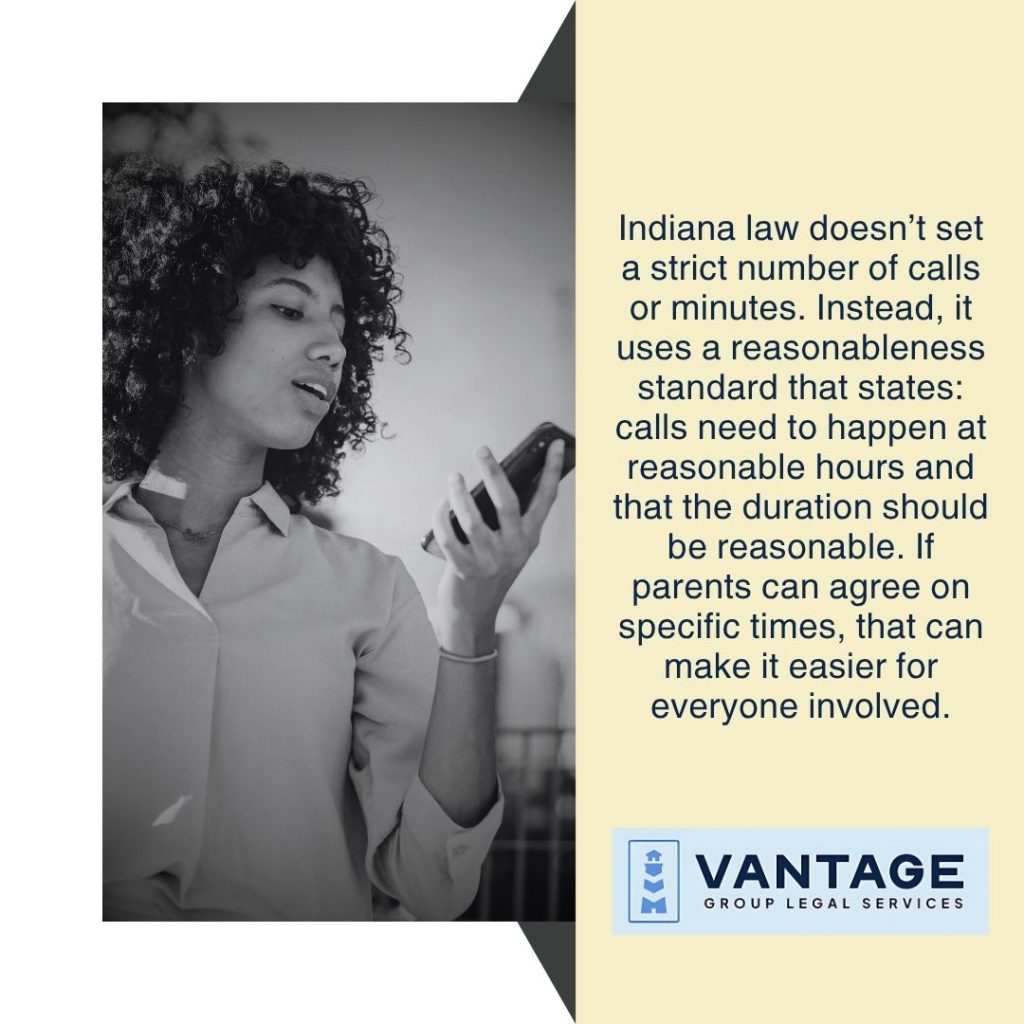
A common question we hear is, “what is reasonable phone contact non-custodial parent?” Indiana law doesn’t set a strict number of calls or minutes. Instead, it uses a reasonableness standard:
- Calls should happen at reasonable hours: not too late or early.
- Duration and frequency should be reasonable: not so long or often that it disrupts the child’s routine.
- Parents are encouraged to agree on specific times for calls, making it easier for the child to be available and for both parents to plan.
The same rules apply to electronic communication, like texts or video calls. As technology changes, courts recognize these as important ways to stay connected.
For more on the Indiana Parenting Time Guidelines, visit the Indiana Judiciary’s official site.
Can a Custodial Parent Block Phone Calls?
A big concern for many is, “can custodial parent block phone calls?” The answer is generally no unless there’s a good reason. The custodial parent cannot unreasonably block or interfere with the non-custodial parent’s communication. Examples of interference include:
- Refusing to answer or let the child answer the phone.
- Turning off or blocking the phone.
- Recording conversations between the child and the other parent.
- Not relaying messages or returning calls.
If you’re experiencing this, it may be considered custodial interference in Indiana.

What Counts as Custodial Interference in Indiana?
Custodial interference happens when one parent intentionally blocks or disrupts the other parent’s right to communicate with their child. Indiana law takes this seriously. The courts expect both parents to:
- Encourage a loving relationship with the other parent.
- Avoid speaking negatively about the other parent in front of the child.
- Cooperate in making sure communication happens.
If a custodial parent is blocking communication, it’s not just frustrating, it can be a violation of court orders.
What to Do If You’re Denied Communication
If you’re a non-custodial parent not allowing phone calls, or if you’re being blocked, here’s what you can do:
1. Try to Resolve It Directly
Start by talking with the other parent. Keep things calm and focused on what’s best for your child. Sometimes, misunderstandings can be cleared up without going to court.
2. Keep Detailed Records
Write down every time communication is blocked. Note the date, time, and what happened. Save texts or emails that show your attempts to connect. This documentation is crucial if you need to take legal action.
3. Seek Legal Advice
If talking doesn’t work, reach out to us at Vantage Group Legal Services. Our network of vetted attorneys can help you understand your options and guide you through the next steps.
4. File a Motion for Contempt
If the problem continues, you may need to file a motion for contempt. This asks the court to enforce the parenting time order. The court can:
- Order make-up parenting time.
- Impose fines or other penalties.
- Modify the parenting plan if needed.
Acting quickly is important. Prolonged interference can harm your relationship with your child and may be viewed negatively by the court.
What Is Reasonable Contact With a Child?
“What is reasonable contact with a child?” means contact that fits the child’s age, needs, and schedule. For young children, shorter, more frequent calls might be best. For older kids, longer or less frequent calls may work. The key is flexibility and focusing on the child’s well-being.
What If the Non-Custodial Parent Blocks Communication?
Sometimes, the roles are reversed. If the non-custodial parent is blocking communication during their time, the custodial parent has the same rights to seek help. Both parents should support the child’s relationship with the other parent.
Recent Updates: Parenting Time Indiana Guidelines
The Parenting Time Indiana Guidelines were updated effective January 1, 2022. These updates clarify and reinforce the rights of both parents to private, reasonable communication with their children. For more details, check the Indiana Parenting Time Guidelines.
Professional Advice: What Legal Experts Say
Indiana family law attorneys agree: Act quickly if you’re denied communication. Courts look for parents who put their child’s needs first and try to resolve issues cooperatively. If you need to go to court, thorough documentation and a focus on your child’s best interests will help your case.
For more on co-parenting and communication, see Kids’ Voice of Indiana and FindLaw’s Indiana Child Custody Guide.
FAQ: Parenting Time Indiana and Communication
Q: What is reasonable phone contact for a non-custodial parent? A: Reasonable phone contact means calls at reasonable hours, for a reasonable length, and at intervals that fit the child’s schedule. There’s no set number — parents should agree on what works best.
Q: Can a custodial parent block phone calls? A: No, unless there’s a valid reason (like safety concerns). Blocking calls without cause can be considered custodial interference.
Q: What should I do if my calls are being blocked? A: Try to resolve it directly, keep records, and seek legal advice. If needed, file a motion for contempt to enforce your rights.
Q: Is denying my children future if I can’t talk to them? A: Ongoing denial of contact can harm your relationship with your child. Indiana law protects your right to communicate and maintain a bond.
Q: What is reasonable contact with a child? A: Contact that fits the child’s age, needs, and daily routine. Flexibility and cooperation are key.
Q: Can the non-custodial parent block communication during their time? A: No. Both parents must support the child’s relationship with the other parent, regardless of custody.
Take the First Step: Get Help Today
Legal challenges can be tough, but you’re not alone. At Vantage Group Legal Services, we offer affordable legal protection and fixed pricing through our network of experienced attorneys. Thousands trust us for reliable, compassionate support and we’re here to help you, too.
Take the first step today so you can get a free consultation and move forward with confidence. Legal help should feel like a helping hand, not a hassle. Let’s solve this together.
Book your free consultation
Or, get answers on the Vantage Forum

Table of Contents
x